
Short answer: in almost every rental situation, the landlord is responsible for keeping the garage door and opener in working condition, unless the damage was caused by the tenant's misuse. Normal wear and tear, broken springs, dying openers, and worn-out rollers are the landlord's problem to fix. A door that got damaged because someone backed a car into it, forced it shut when it was off-track, or disconnected the opener and never mentioned it — that's usually on the tenant. Everything else lives in the gray area that lease language is supposed to cover, and often doesn't.
Why This Argument Keeps Happening
Garage doors are one of those things nobody thinks about until they stop working, and leases rarely spell out who covers what beyond "appliances" and "structural issues." A garage door is arguably both — it's a moving mechanical system attached to the house. That ambiguity is exactly why couples (and roommates, and landlords and tenants) end up arguing about it at 9pm when the door won't open and someone's car is stuck inside.
What's Generally the Landlord's Job
- Spring replacement. Springs wear out from age and cycle count, not from anything the tenant did. This is standard maintenance, not tenant damage.
- Opener failure from age. If the opener motor burns out, the circuit board fails, or the remote stops syncing after years of normal use, that's equipment lifespan — not misuse.
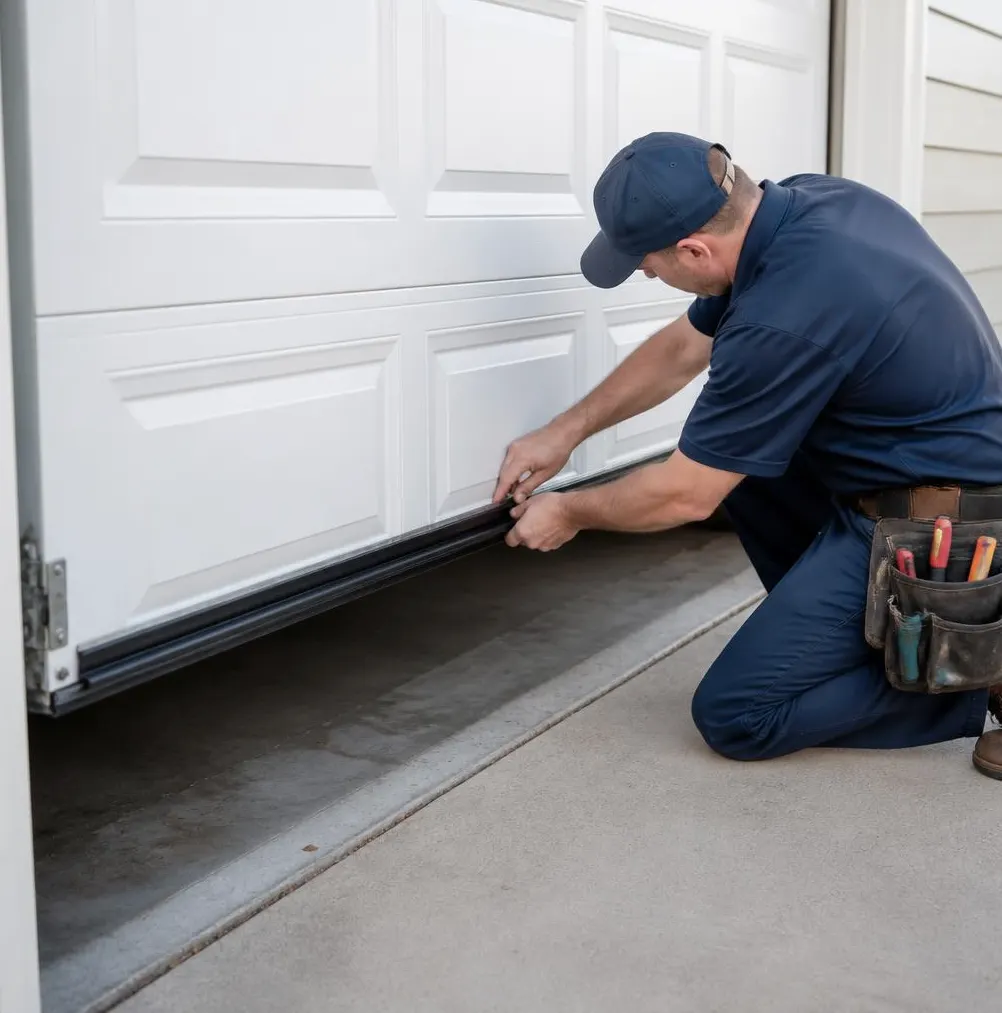
- Weatherstripping and seals. Especially relevant here with the big seasonal swings — cracked bottom seals after a cold winter are wear and tear, not tenant negligence.
- Cables, rollers, and hinges wearing out. These parts have a lifespan measured in cycles (how many times the door opens and closes), and that clock runs regardless of who's living there.
- Anything present and broken at move-in that wasn't disclosed or documented.
What's Generally the Tenant's Job
- Damage from misuse — forcing a stuck door, driving into it, or ignoring an obvious problem (like a door visibly off-track) until it gets worse.
- Battery replacement in wall consoles, keypads, and remotes — this is routine upkeep, similar to replacing smoke detector batteries.
- Reporting problems promptly. A tenant who hears grinding, sees fraying cable, or notices the door reversing randomly and says nothing for three months has made the eventual repair worse, and that delay can shift responsibility for the extra damage.
- Basic care — not storing things that block the sensors, not letting ice buildup jam the track without mentioning it, keeping the area clear.
The exact split depends on the lease, so whoever is reading this with a lease in hand should actually check it — a lot of leases have an appliances or maintenance clause that covers this, even if it doesn't say "garage door" by name.
The Move-In Inspection: What to Actually Check
This is the step almost everyone skips, and it's the single best way to avoid an argument six months later. Before signing anything, walk out to the garage and do this together:
- Open and close the door manually (disconnect the opener first) and feel for resistance, grinding, or uneven movement.
- Run it with the opener and listen — a smooth hum is normal, loud bangs or scraping are not.
- Check the springs above the door. Rust, gaps, or visible stretching are red flags worth photographing.
- Test the auto-reverse safety feature by placing a 2x4 flat on the ground where the door closes. It should reverse on contact. If it doesn't, that's a safety issue, not a cosmetic one.
- Check the weatherstripping along the bottom and sides for cracks or gaps — with Indiana winters bringing ice and road salt tracked in from the driveway, a bad seal means cold air, moisture, and salt residue getting into the garage all winter.
- Test the remotes and keypad, and ask who's responsible for replacement batteries.
- Photograph everything — dents, rust, frayed cables, anything already present — and get it in writing or attached to the lease. This single step prevents almost every "was that like that before?" argument.
If anything on that list looks questionable, it's worth having a technician do a quick inspection before move-in rather than guessing. A $100–$200 inspection is cheap insurance compared to a dispute over a $300–$600 repair later.
When to Call Pittsboro Garage Door Pro
If you're a landlord trying to get ahead of a problem, or a tenant trying to document what's already wrong, Pittsboro Garage Door Pro can do a full garage door inspection and give you a written assessment — useful for lease records either way. If the issue is clearly mechanical, like a spring that's visibly stretched or an opener that's grinding instead of running smooth, our spring replacement and garage door opener repair services get it back to safe, reliable operation fast, with no guesswork about what's actually broken. We work across Pittsboro, Brownsburg, Danville, Avon, Lizton, Clayton, Plainfield, and North Salem, so whether it's a rental you own or a rental you live in, we can get eyes on it quickly.
Settle the argument, fix the door, and stop losing time to a garage that won't open. Call Pittsboro Garage Door Pro today to schedule service in Pittsboro, IN.